The Great American Smokeout 2026 is Thursday, November 19, and this year marks the American Cancer Society’s 50th Smokeout. It also lands during Lung Cancer Awareness Month, which makes it the perfect day to take a first step toward quitting. In this Healthy Delaware segment on Good Morning Delaware, hosts Ivan Thomas and Vincenza Carrieri-Russo share why quitting matters, how to build a quit plan that works, and where Delawareans can get free help to quit smoking.
Whether you’re ready to quit this Thursday or you’re cheering on someone who is, this guide has you covered, including a full list of free resources.
🗓️ THURSDAY, NOV. 19, 2026
Try going smoke-free for 24 hours. One day can turn into a fresh start.

In This Article
What Is the Great American Smokeout?
Held every third Thursday in November, the Great American Smokeout is the American Cancer Society’s yearly invitation to quit tobacco, even if it’s just for one day. You can use the day to quit outright, or to make a plan and set a quit date that works for you. Either way, it’s a chance to join people across the country who are making the same promise to themselves.
In the segment, Ivan and Vincenza walk through:
- 🫁 Why smoking is the leading cause of lung cancer, and how it also affects your heart and breathing
- 💚 How your body starts to heal soon after you quit, and why every smoke-free day counts
- 💪 Why it often takes a few tries to quit, and why past attempts are practice, not failure
- 📝 How to make a quit plan: pick a quit day, tell a friend or family member, and know your triggers
- 🩺 Why you should talk to your doctor about options that can make quitting easier
- ❤️ How to support someone you love who is trying to quit
🫁 Smoking and Your Lungs by the Numbers
80–90%
of U.S. lung cancer deaths are linked to cigarette smoking
15–30x
more likely to get or die from lung cancer if you smoke
20 min
after your last cigarette, heart rate and blood pressure drop
About ½
the risk of dying from lung cancer 10 years after quitting
Sources: Centers for Disease Control and Prevention; American Cancer Society.
Why Quitting Smoking Matters for Your Lungs and Heart
Cigarette smoking is the number one risk factor for lung cancer. According to the CDC, it’s linked to about 80% to 90% of lung cancer deaths in the United States, and people who smoke are 15 to 30 times more likely to get or die from lung cancer than people who don’t.
Lung cancer isn’t the only concern. Smoking can cause cancer almost anywhere in the body, and it damages your heart, blood vessels and airways. That’s a big reason so many people who smoke deal with shortness of breath, a lingering cough and a higher risk of heart attack and stroke. The encouraging part: quitting at any age lowers your risk.
How Your Body Heals After You Quit
Here’s the best news of all. Your body starts to bounce back within minutes of your last cigarette, and the benefits keep building for years. Here’s what the American Cancer Society says happens when you quit:
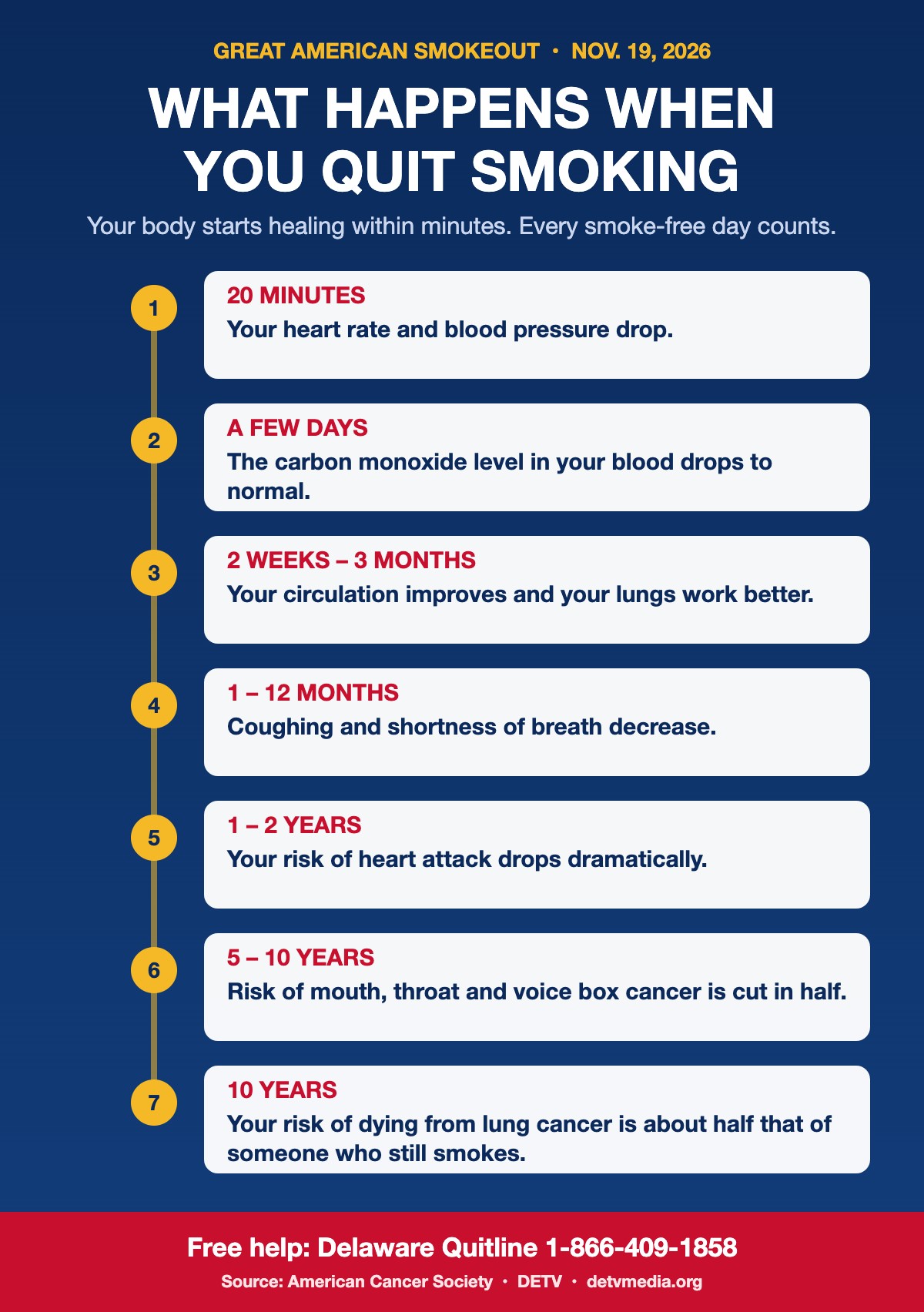
In other words, every smoke-free day counts, whether it’s your first or your five hundredth.
6 Proven Steps to Quit Smoking for Good
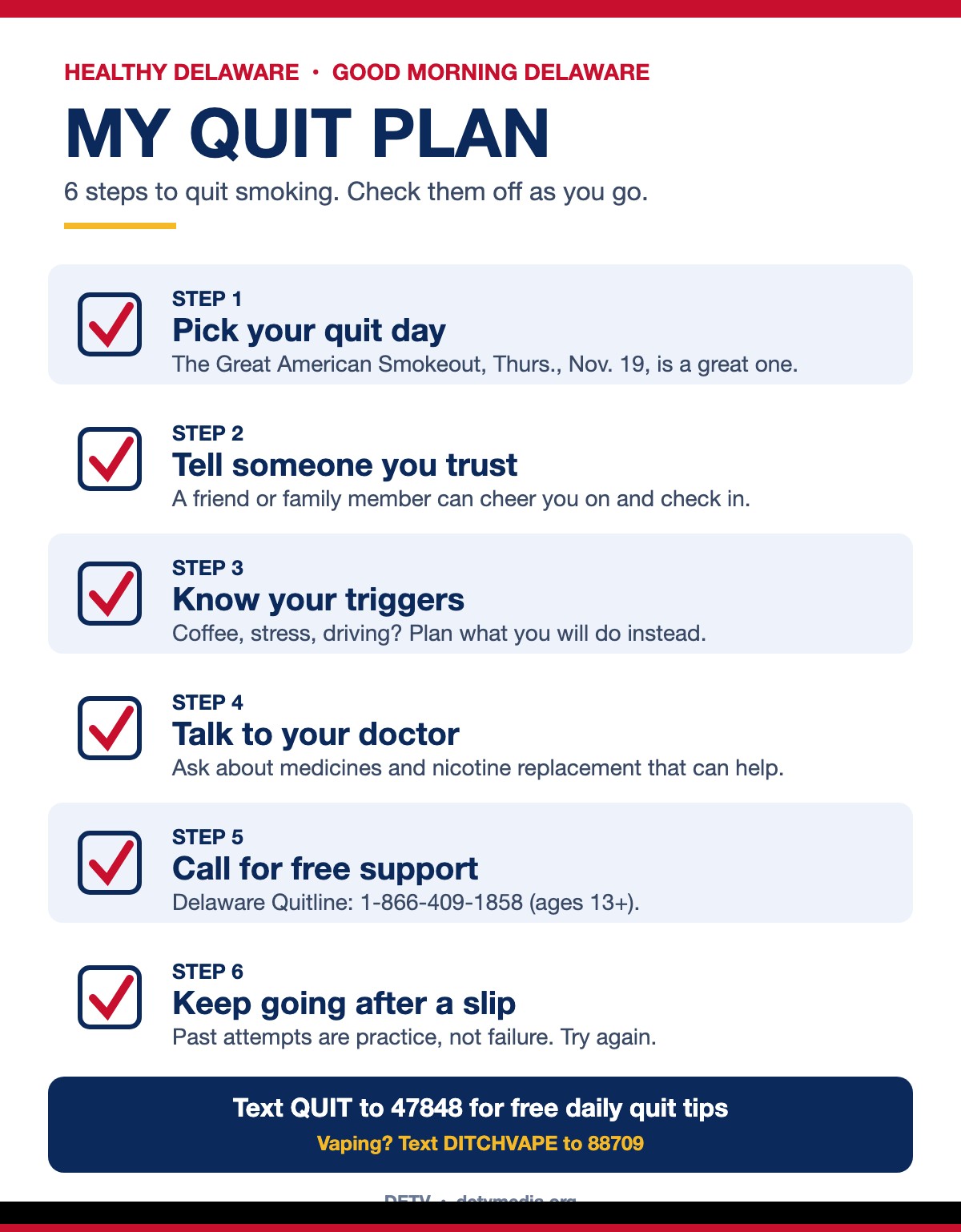
Quitting is easier with a plan. Use these six steps from the segment as your roadmap, and save the checklist below.
1. Pick Your Quit Day
Choose a date and circle it on the calendar. The Great American Smokeout on November 19 is a natural fit, but any day in the next couple of weeks works. Having a date gives you time to prepare without putting it off forever.
2. Tell a Friend or Family Member
Saying it out loud makes it real. Let the people close to you know your quit day so they can check in, cheer you on and avoid smoking around you.
3. Know Your Triggers
Most people have go-to moments for a cigarette: the morning coffee, the drive to work, a stressful call, a night out. Write yours down, then plan a swap for each one, like chewing gum in the car or taking a short walk after meals.
4. Talk to Your Doctor
Your doctor can recommend FDA-approved medicines and nicotine replacement, like patches, gum or lozenges, that ease cravings and withdrawal. Using medicine along with counseling gives you a better shot than willpower alone.
5. Get Free Support
You don’t have to do this alone. The Delaware Quitline (1-866-409-1858) offers free, confidential coaching for Delawareans 13 and older, and Healthy Delaware notes that getting help can triple your chances of success.
6. Expect Slip-Ups and Keep Going
It often takes a few tries to quit for good. If you slip, don’t throw in the towel. Figure out what led to it, adjust your plan and pick a new quit day.
Past quit attempts aren’t failures. They’re practice for the one that sticks.
Healthy Delaware on Good Morning Delaware
How to Support Someone Who Is Trying to Quit
If someone you love is quitting, your encouragement can make a real difference. Here’s how to help without adding pressure:
❤️ 6 Ways to Be a Great Quit Buddy
- Ask how you can help. Some people want daily check-ins. Others just want you to listen.
- Skip the lectures. Nagging adds stress, and stress is a common trigger.
- Keep your home and car smoke-free so there’s less temptation around.
- Be patient with cravings and mood swings. Nicotine withdrawal is real, and it passes.
- Offer a distraction. A walk, a snack or a quick phone call can get someone through a craving.
- Celebrate milestones, like one day, one week and one month smoke-free.
Free Help to Quit Smoking in Delaware
Delaware has plenty of free, confidential resources, whether you want to talk to someone, text, or work online. Find the one that fits you best:
📞 Delaware Quitline
1-866-409-1858
Free, confidential quit coaching for Delawareans 13 and older, by phone or in person. Eligible adults may get free patches or gum. Learn more →
💻 QuitSupport.com
Online coaching
Prefer to type instead of talk? Work with a certified Quit Coach online, at your own pace. Get started →
☎️ 1-800-QUIT-NOW
1-800-784-8669
The national quitline connects you to free support in whatever state you live in.
📱 SmokefreeTXT
Text QUIT to 47848
Free daily text messages for 6 to 8 weeks to help you through cravings and slip-ups. Sign up →
💨 This Is Quitting
Text DITCHVAPE to 88709
A free, anonymous text program from Truth Initiative built for teens and young adults who want to quit vaping. Learn more →
💚 Delaware Hope Line
1-833-9-HOPEDE
Stress, anxiety or addiction making it harder? Get free 24/7 support: 1-833-946-7333. More resources →
This segment is brought to you by the Behavioral Health Consortium.
Ready to Quit? Free Help Is One Call Away
Call the Delaware Quitline at 1-866-409-1858, or plan your quit day with the American Cancer Society. In a crisis? Call or text 988 any time.

FAQ: Great American Smokeout 2026
When is the Great American Smokeout 2026?
The Great American Smokeout 2026 is Thursday, November 19. The American Cancer Society holds it every year on the third Thursday of November, and 2026 marks its 50th anniversary.
How can I quit smoking for free in Delaware?
Call the Delaware Quitline at 1-866-409-1858 for free, confidential coaching by phone or in person. Eligible adults may also receive free nicotine patches or gum. You can also get online coaching at QuitSupport.com or text QUIT to 47848 for SmokefreeTXT.
What happens to your body when you quit smoking?
According to the American Cancer Society, your heart rate and blood pressure drop within 20 minutes. Within a few days, carbon monoxide in your blood returns to normal. Over the following months your circulation and lung function improve, and about 10 years after quitting your risk of dying from lung cancer is roughly half that of someone who still smokes.
Can the Delaware Quitline help me quit vaping?
Yes. The Delaware Quitline supports people who want to quit vaping, smoking or other tobacco products. Teens and young adults can also text DITCHVAPE to 88709 to join This Is Quitting, a free text program.
What if I have tried to quit before and failed?
You are not alone. Many people try several times before they quit for good. Each attempt teaches you more about your triggers and what works, so treat past attempts as practice and try again with more support, such as counseling or medicine from your doctor.
Catch more Healthy Delaware segments on Good Morning Delaware, DETV’s community morning show, and find more local wellness stories in our Health section. If this guide helped, share it with someone who’s ready to quit. 💙