Physical activity and mental health go hand in hand. Getting moving can start with a walk, a dance break or an activity you enjoy, and it can do more for your mind than you might think.
In this Healthy Delaware segment on Good Morning Delaware, Ivan Thomas and Vincenza Carrieri-Russo explore how physical activity can support your mood, help manage stress and improve sleep, plus simple ways to build more movement into your routine.
How Physical Activity Supports Mental Health
Exercise isn’t just about your body. According to the Centers for Disease Control and Prevention (CDC), moving your body helps you feel better, function better and sleep better, and some of those benefits show up right away.
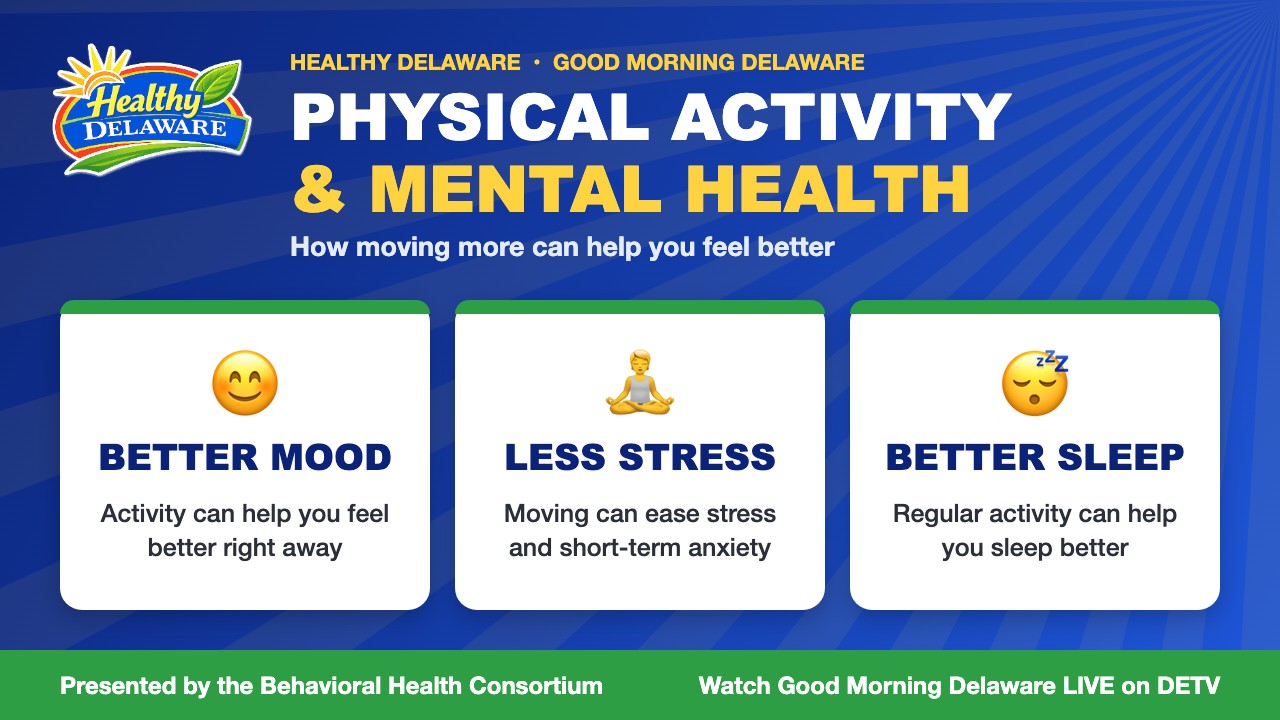
- 😊 Mood: Even one session of activity can help you feel better.
- 🧘 Stress and anxiety: Adults may feel less anxious after a bout of activity, and regular activity can lower the risk of anxiety.
- 💙 Depression risk: Staying active on a regular basis can lower the risk of depression.
- 😴 Sleep: Physical activity can help you sleep better.
- 🧠 Brain health: Over time, regular activity may help keep thinking, learning and judgment skills sharp as you age.

How Much Physical Activity Do Adults Need?
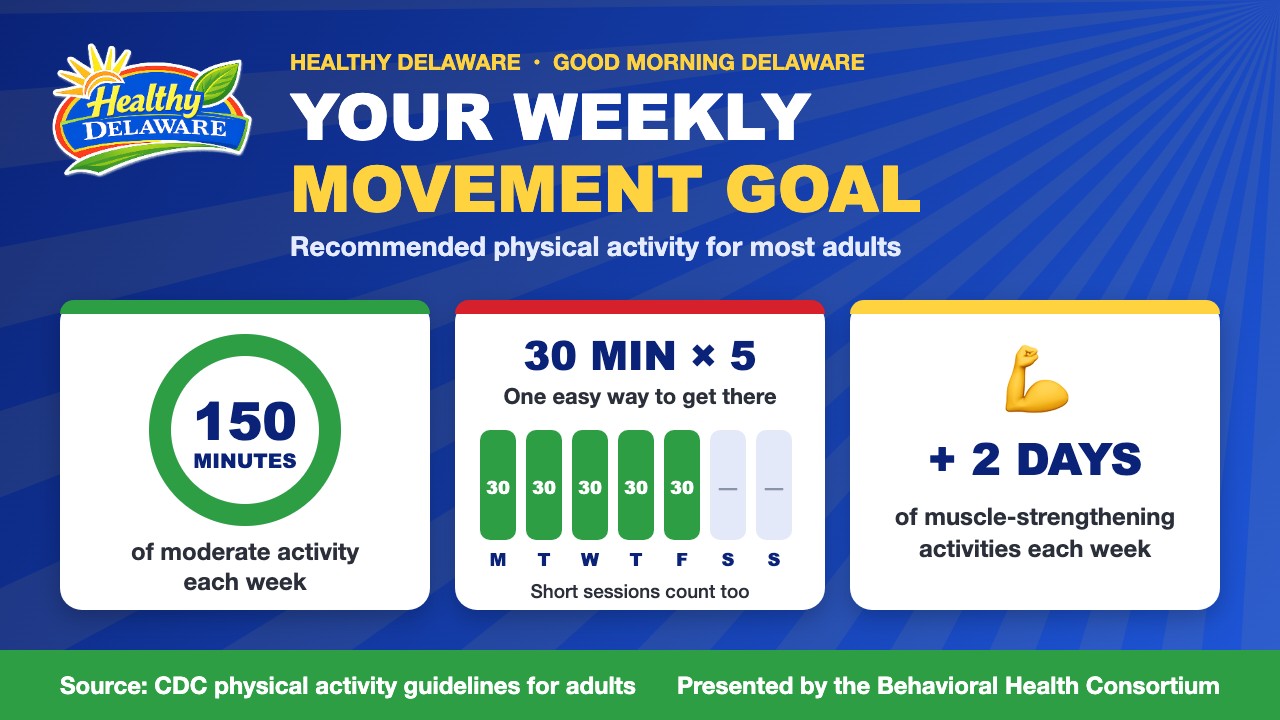
For most adults, the weekly goal is at least 150 minutes of moderate activity, plus muscle-strengthening activities on two days, according to CDC guidelines for adults.
| Activity type | Weekly goal | Examples |
|---|---|---|
| Moderate aerobic activity | 150 minutes | Brisk walking, biking, dancing |
| Vigorous aerobic activity (alternative) | 75 minutes | Jogging or running |
| Muscle strengthening | 2 or more days | Work legs, hips, back, abdomen, chest, shoulders and arms |
💡 Good news: You don’t have to do it all at once. Thirty minutes a day on five days gets you to 150, shorter sessions count, and some activity is better than none.
4 Simple Ways to Build Movement Into Your Routine
Ivan and Vincenza share four easy ways to get started:
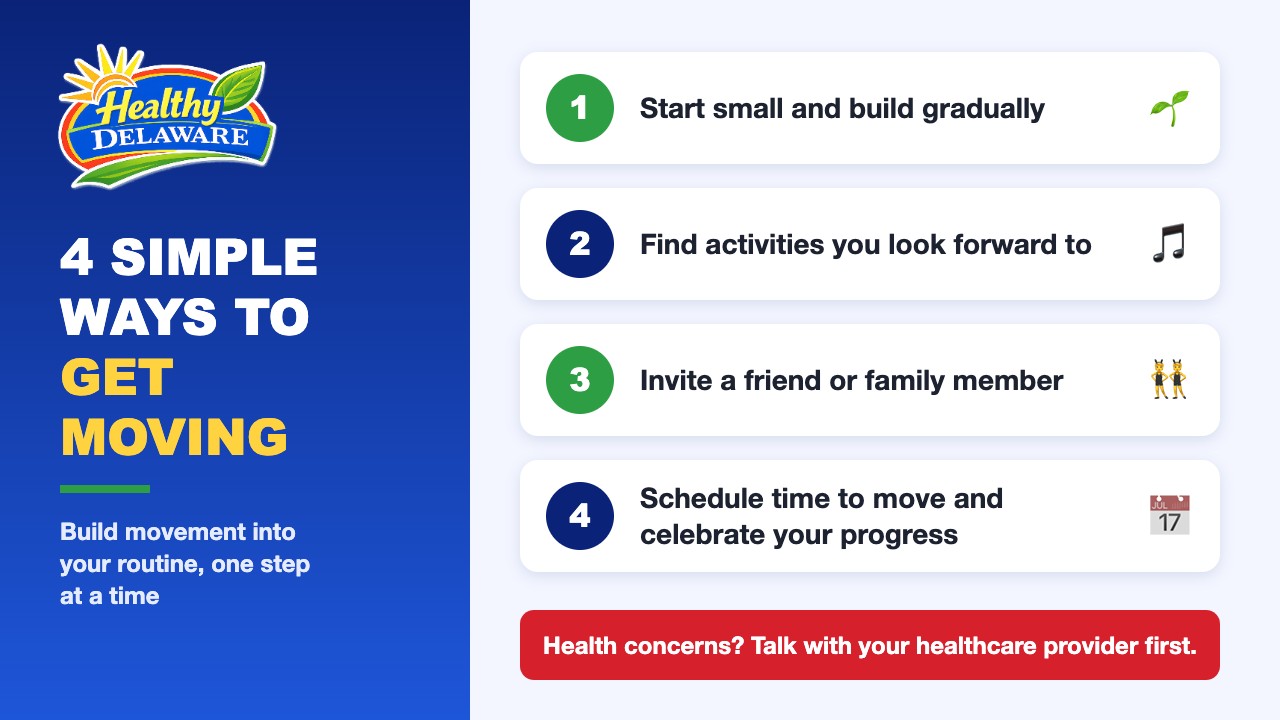
1. Start Small and Build Gradually
A 10-minute walk is a great start. Add a few minutes at a time as it starts to feel easier.
2. Find Activities You Look Forward To
If you enjoy it, you’re more likely to keep doing it. Try a few different activities until something clicks.
3. Invite a Friend or Family Member
Moving with someone else makes it more fun and helps you stay accountable. It’s also a great way to connect.
4. Schedule Time to Move and Celebrate Your Progress
Put activity on your calendar like any other appointment, and take a moment to recognize each win along the way.
🩺 Before you start: If you have a health condition or concerns about getting started, talk with your healthcare provider.

Find a Way to Move That You Love
There’s no single right way to get active. Walking, biking and dancing all count, and so do everyday activities like gardening or walking the dog.

💬 Your turn: Walking, biking, dancing or something else? What’s your favorite way to get moving? Share it on social media with #HealthyDelaware.
Need Support for Your Mental Health?
Physical activity is one tool for feeling better, but it isn’t a replacement for professional care. If stress, anxiety or low mood are getting in the way of daily life, help is available in Delaware, regardless of insurance.
📞 Delaware Hope Line: Call 1-833-9-HOPEDE (1-833-946-7333), free and available 24/7.
🆘 In a crisis: Call or text 988, the Suicide and Crisis Lifeline.
Watch Healthy Delaware on Good Morning Delaware LIVE
Healthy Delaware is brought to you by the Behavioral Health Consortium. Watch the full segment above, and for more from Healthy Delaware, check out diabetes and mental health at the holiday table and understanding ADHD in children and adults.
Frequently Asked Questions
How does physical activity help mental health?
According to the CDC, physical activity can help you feel better and sleep better right away. Adults may feel less anxious after activity, and staying active regularly can lower the risk of anxiety and depression.
How much physical activity do adults need each week?
Most adults should aim for at least 150 minutes of moderate activity each week, such as brisk walking, plus muscle-strengthening activities on two days.
Do short bursts of activity count?
Yes. You can split activity into shorter sessions throughout the week, and some activity is better than none.
What is the easiest way to start exercising?
Start small and build gradually, pick activities you enjoy, invite a friend or family member and schedule time to move. If you have a health condition, talk with your healthcare provider first.
This article is general information and isn’t a substitute for medical advice.